
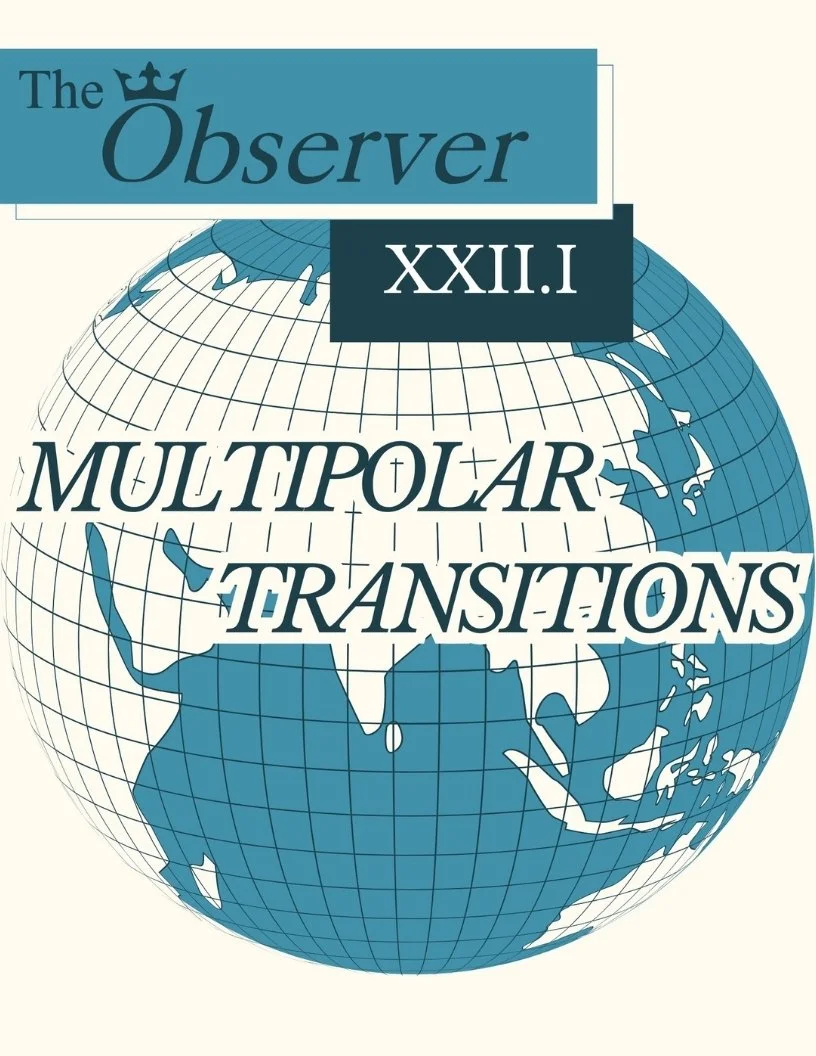
Multipolar Transitions
Vol. XXII.I
The geopolitical world is continuously in motion, but recently, that motion resembles seismic rupturing and restructuring. From the fragmentation of long-standing Western multilateral collaboration to rapidly evolving data governance of digital economies, power is not only being contested on the international scale, it is being redistributed. As we witness a reactionary return to multipolarity, the decline of previously hegemonic powers presents a period of profound transformation and contestation of economic, political and socio-cultural spheres of influence.
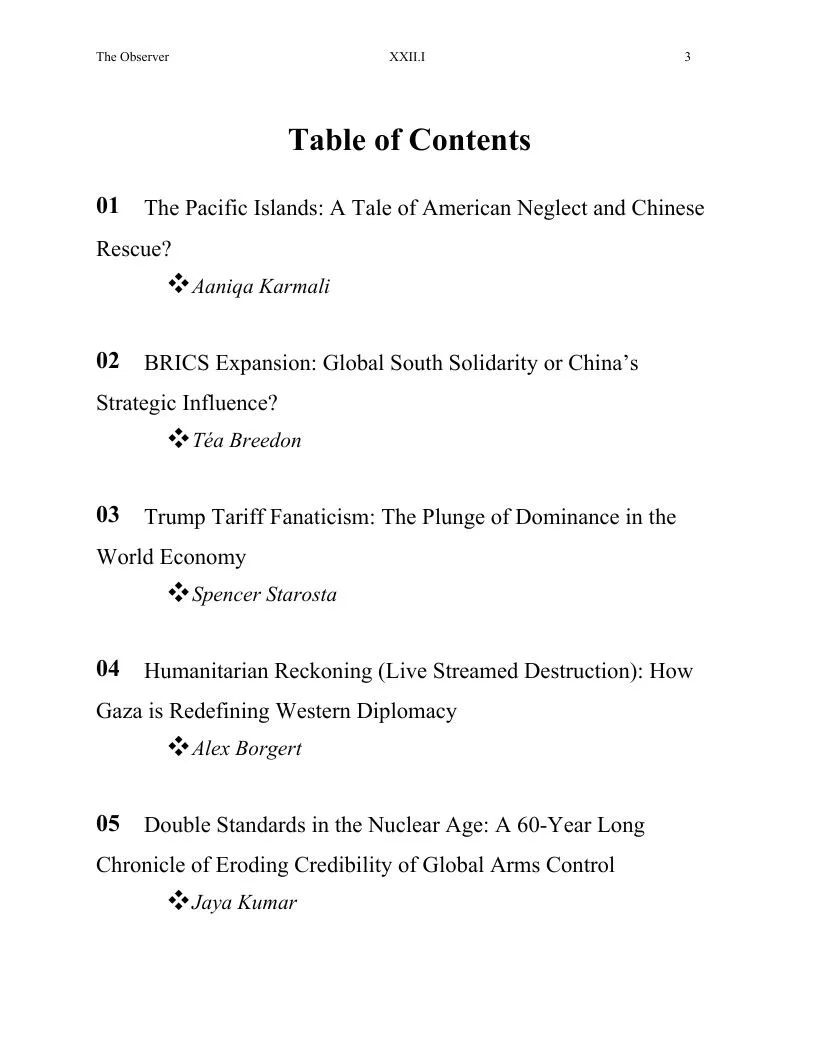
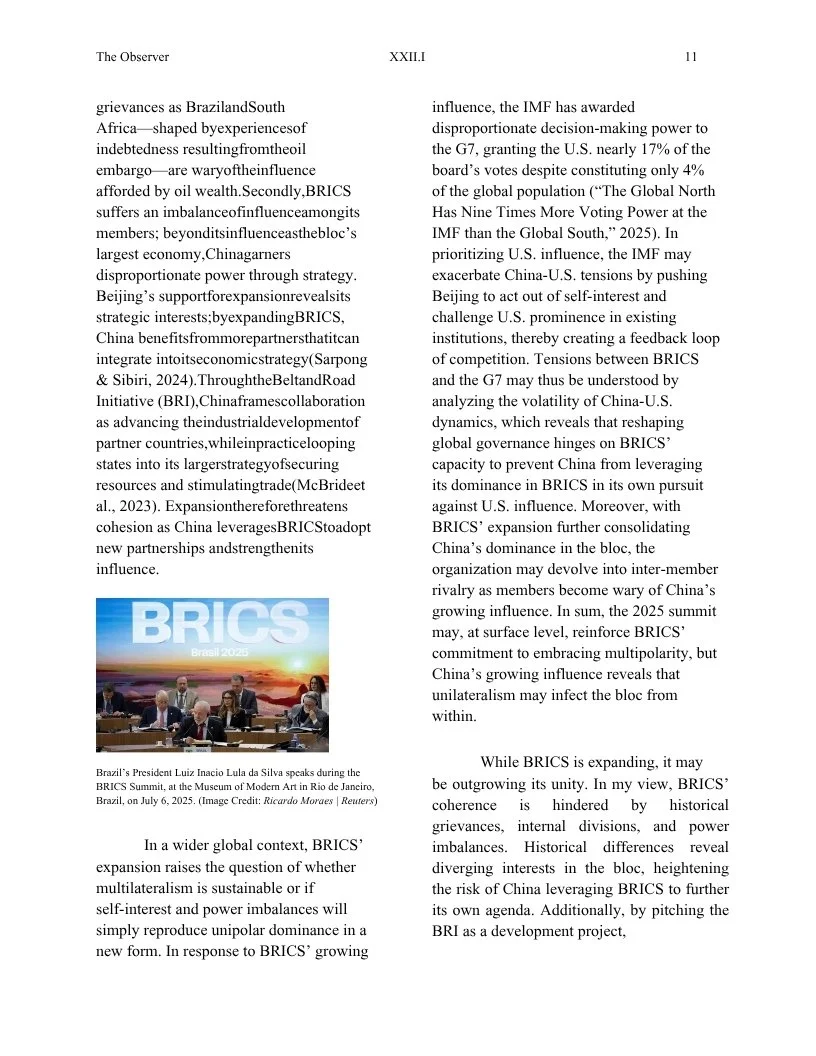
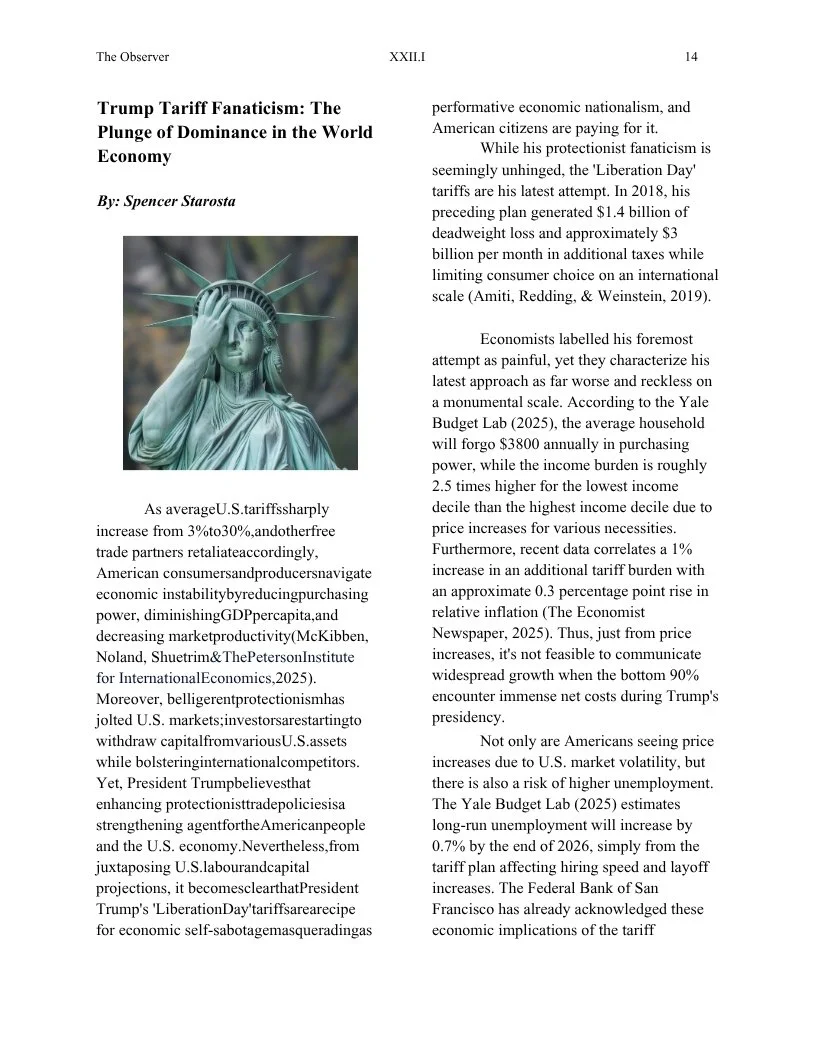
Our contributors have captured critical moments from this summer that illuminate broader patterns of change. Aaniqa Karmali traces how American protectionism is paradoxically strengthening Chinese influence in the strategically vital Pacific Islands. Téa Breedon investigates whether BRICS can overcome internal contradictions to genuinely challenge Western dominance, or if it merely reproduces hierarchical power structures in new forms. Spencer Starosta analyzes how Trump's tariff policies are accelerating American economic decline while inadvertently empowering competitors. Alex Borgert documents the fracturing of Western consensus on Israel, revealing deeper cracks in transatlantic unity. Jaya Kumar explores how nuclear powers are abandoning arms control commitments, undermining the credibility of global governance institutions they themselves created.
These developments raise fundamental questions about the nature of international order itself. Are we witnessing the birth pangs of a genuinely multipolar world, or simply the chaotic transition between one hegemonic system and another? Can institutions designed for a unipolar moment adapt to multipolar realities? And crucially, whose voices are centered in these transformations, and whose remain marginalized?