
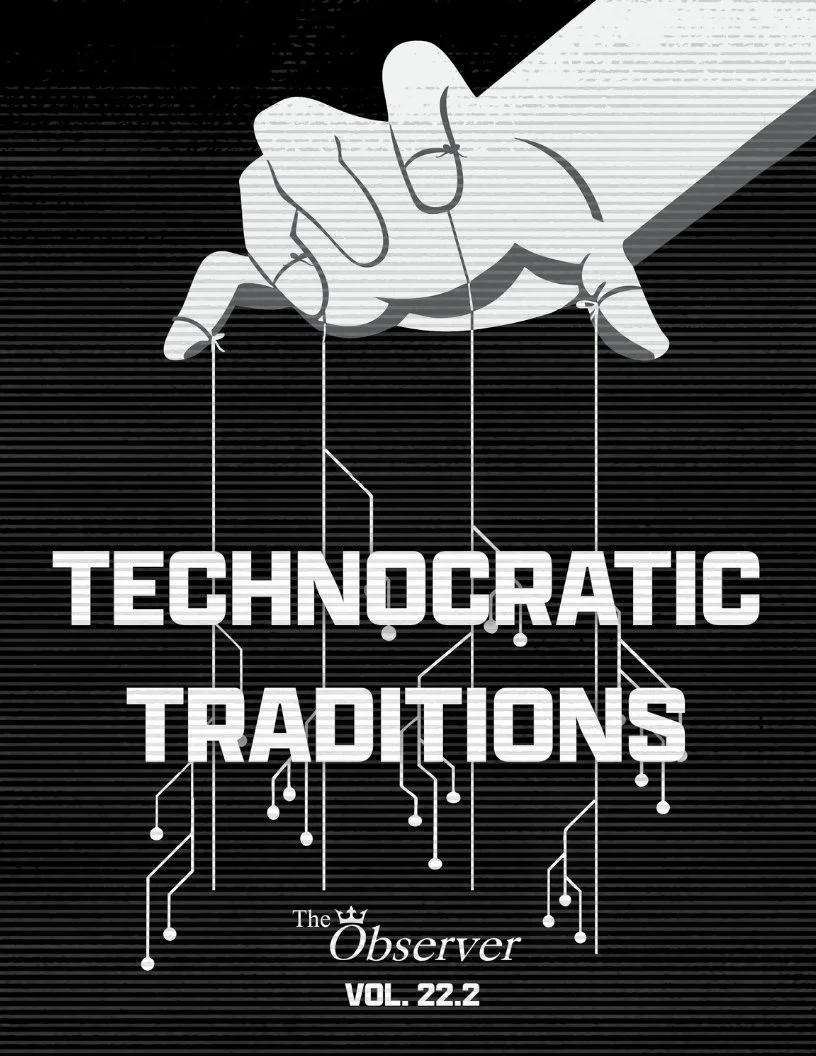
Technocratic Traditions
Volume 22.2 , Issue XXII.I
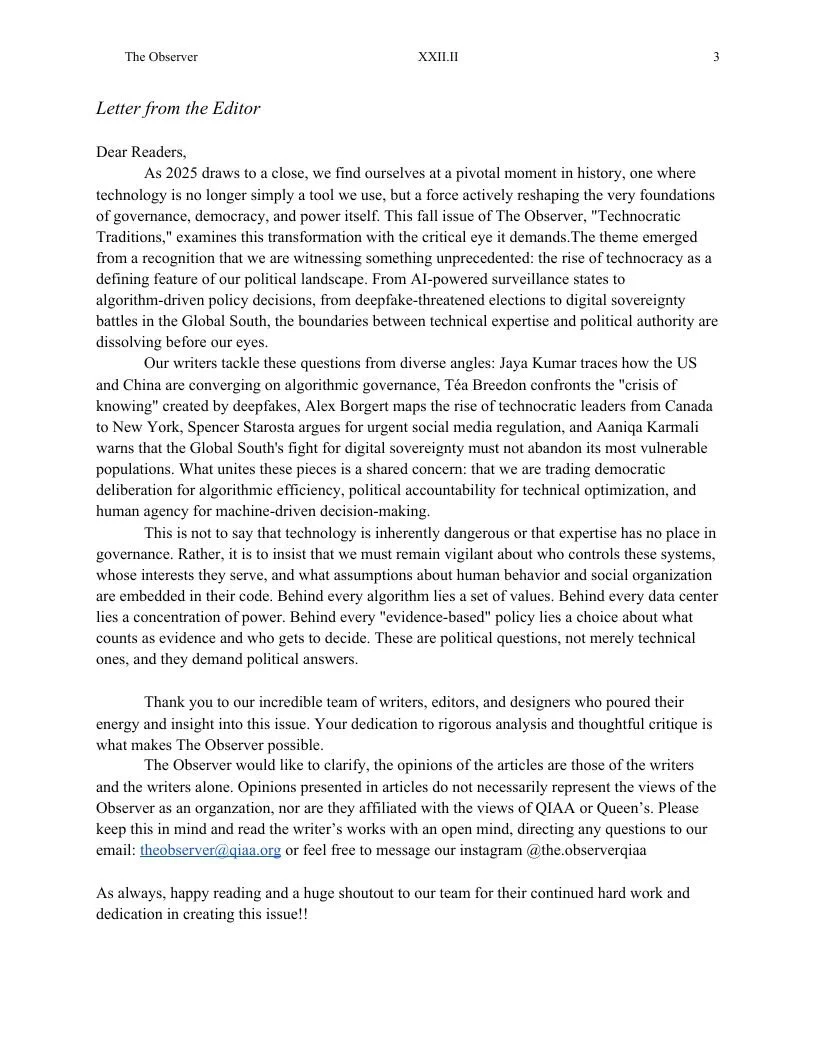
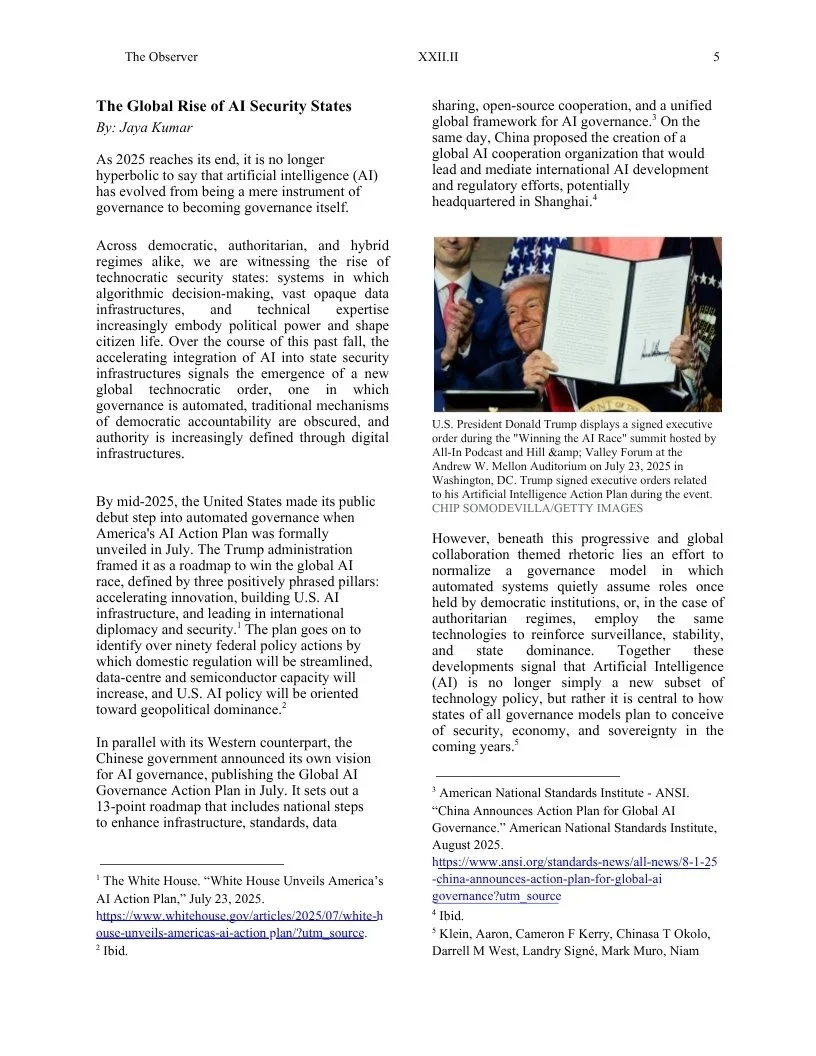
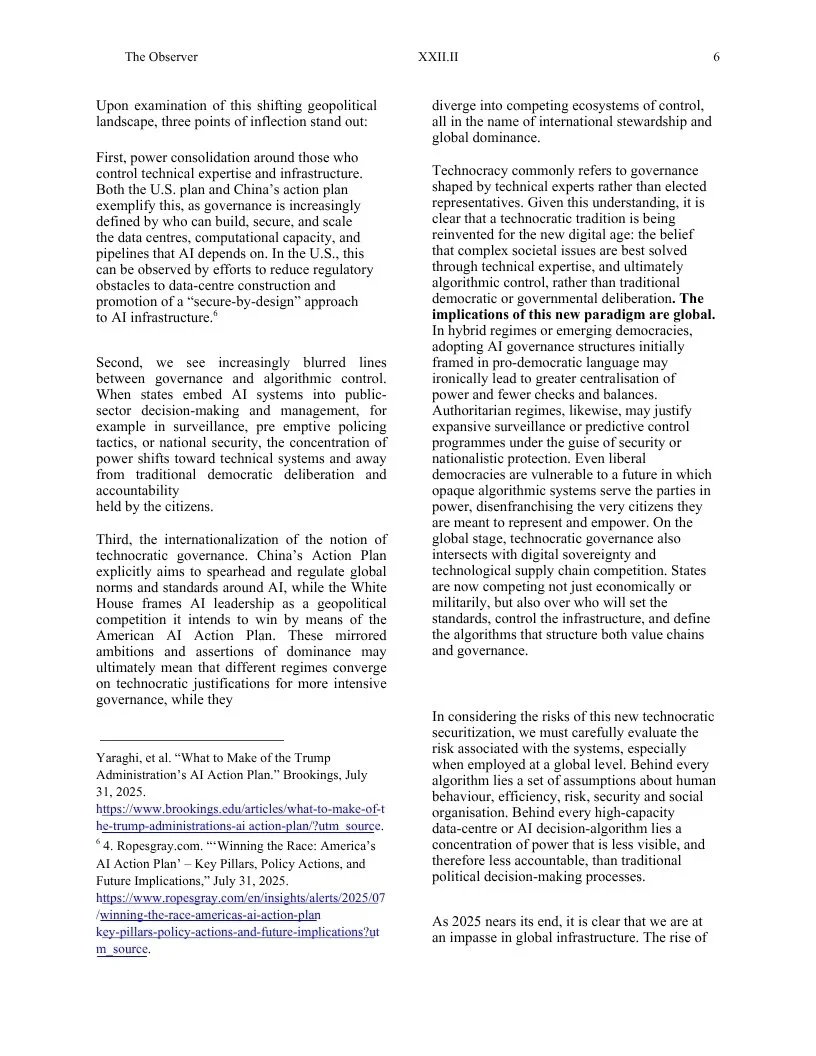
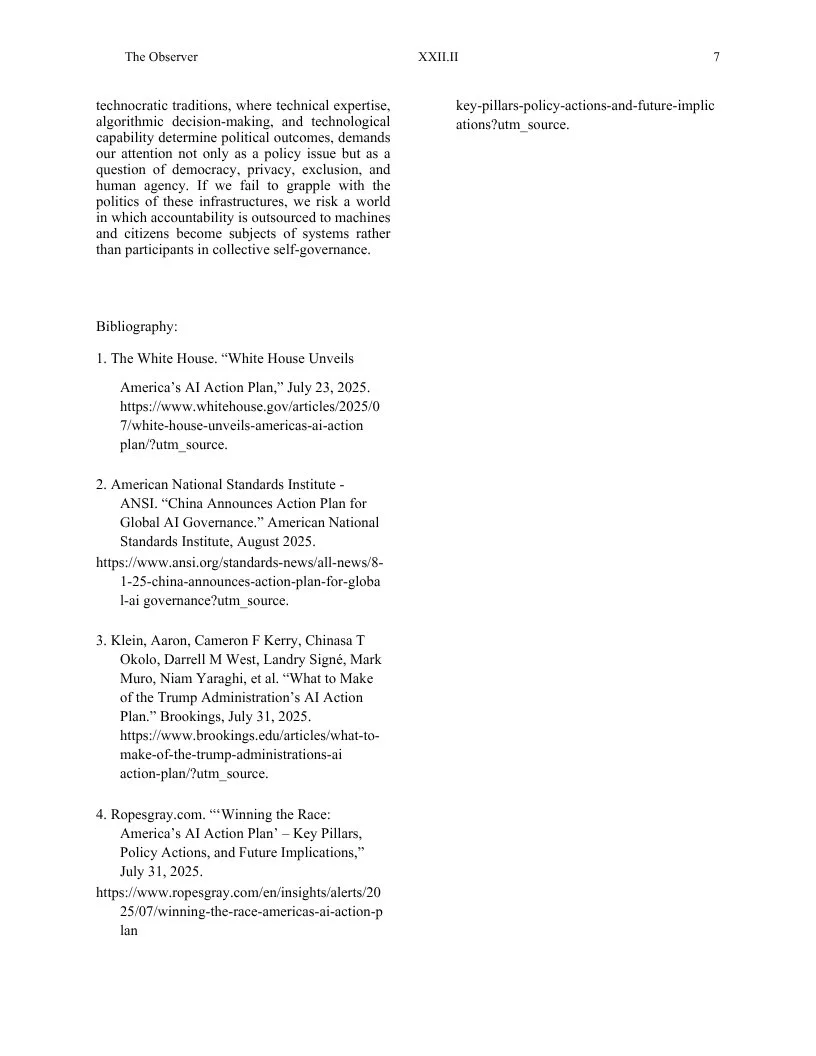
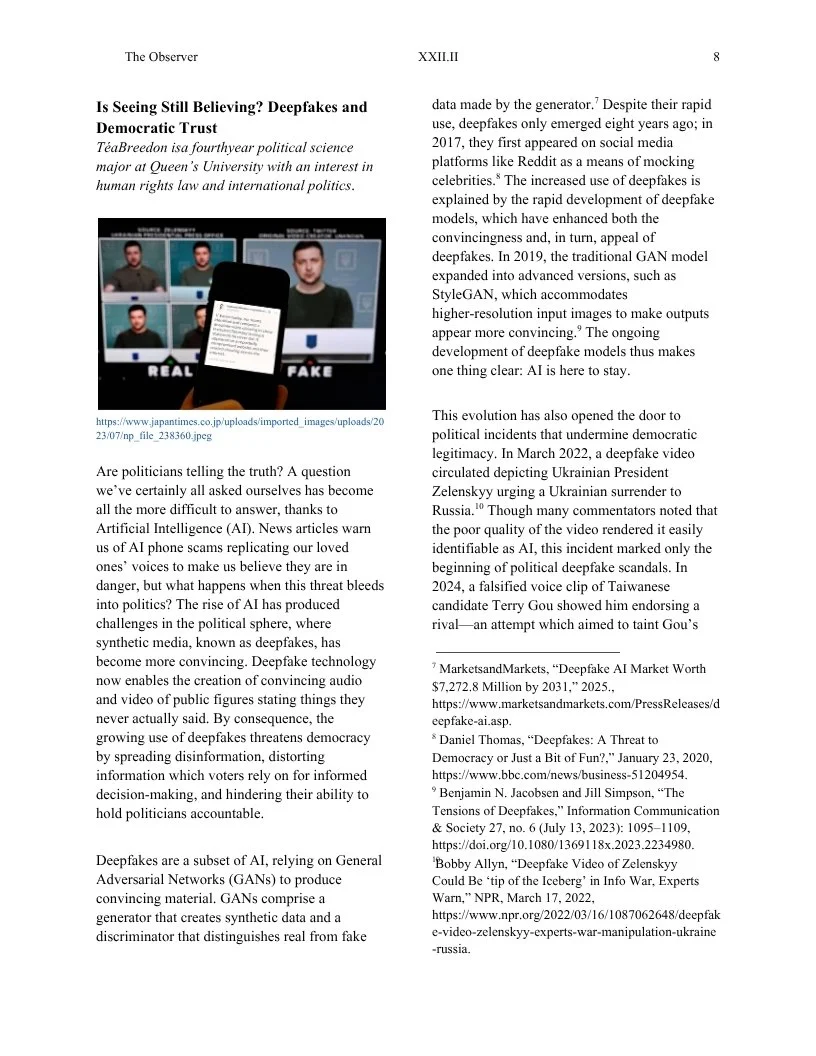
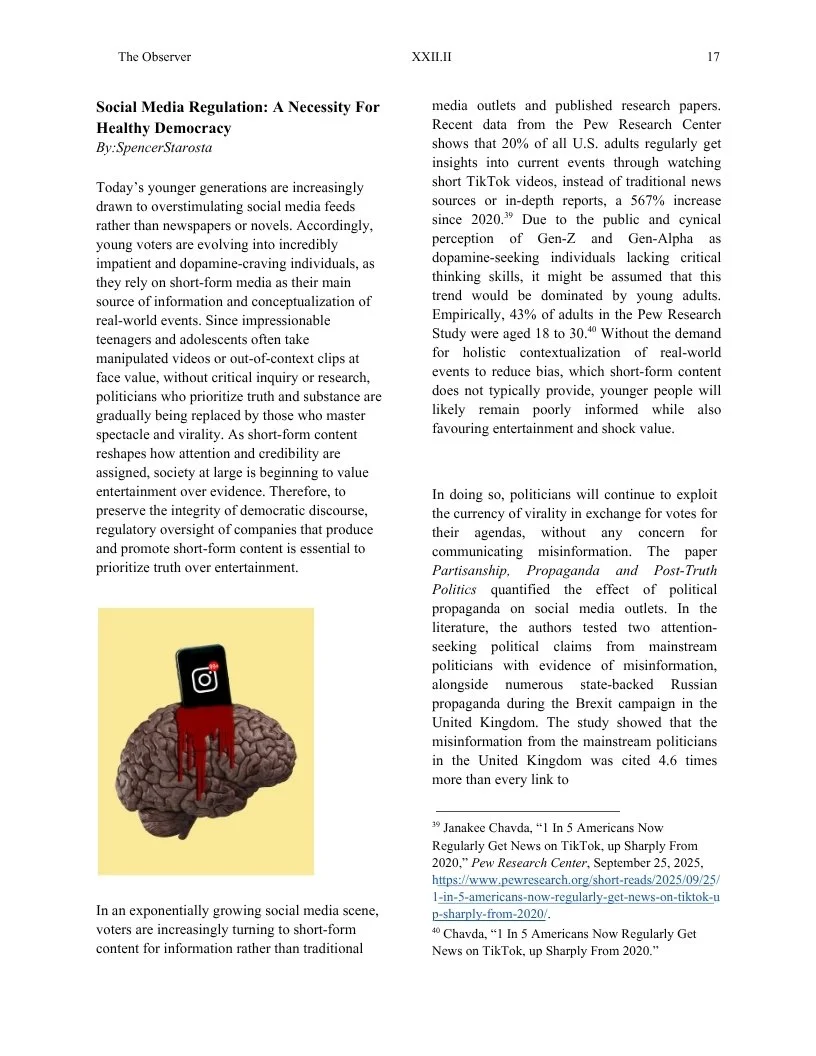
As 2025 draws to a close, we find ourselves at a pivotal moment in history, one where technology is no longer simply a tool we use, but a force actively reshaping the very foundations of governance, democracy, and power itself. This fall issue of The Observer, "Technocratic Traditions," examines this transformation with the critical eye it demands. The theme emerged from a recognition that we are witnessing something unprecedented: the rise of technocracy as a defining feature of our political landscape. From AI-powered surveillance states to algorithm-driven policy decisions, from deepfake-threatened elections to digital sovereignty battles in the Global South, the boundaries between technical expertise and political authority are dissolving before our eyes.
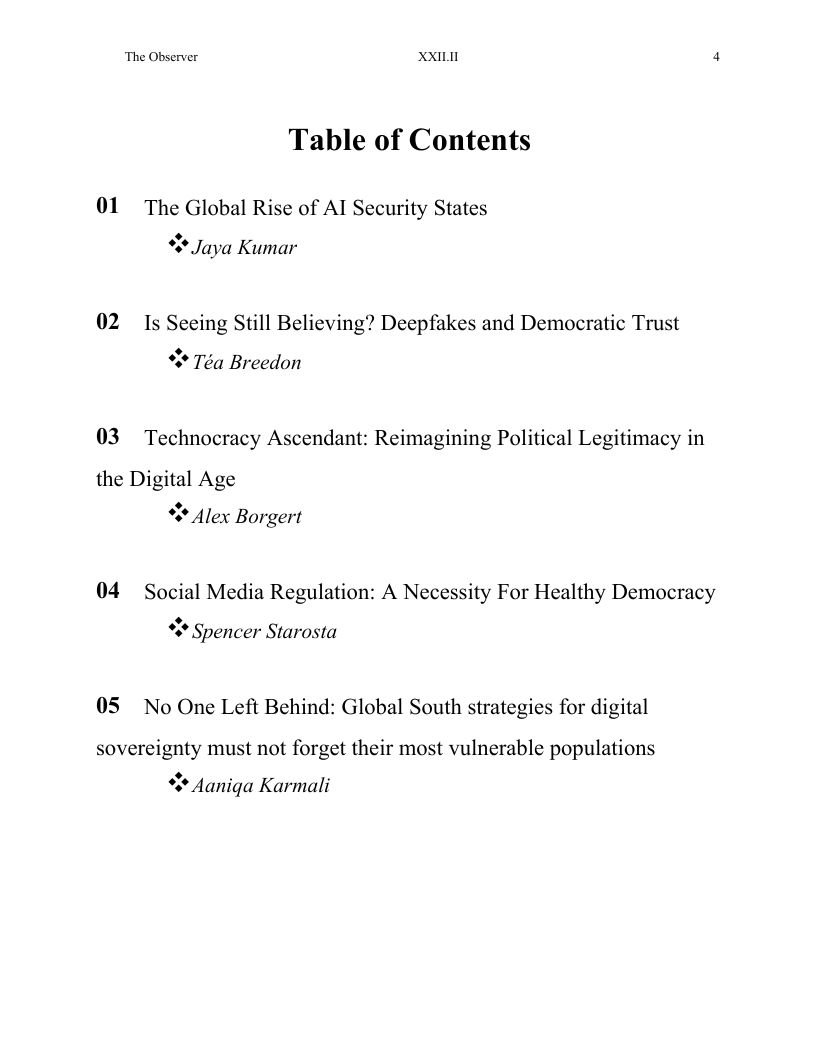
Our writers tackle these questions from diverse angles: Jaya Kumar traces how the US and China are converging on algorithmic governance, Téa Breedon confronts the "crisis of knowing" created by deepfakes, Alex Borgert maps the rise of technocratic leaders from Canada to New York, Spencer Starosta argues for urgent social media regulation, and Aaniqa Karmali warns that the Global South's fight for digital sovereignty must not abandon its most vulnerable populations. What unites these pieces is a shared concern: that we are trading democratic deliberation for algorithmic efficiency, political accountability for technical optimisation, and human agency for machine-driven decision-making.